
An SSN on a rental application is only as useful as your ability to confirm it. Is it valid? Does it actually belong to the applicant? And what about the qualified renters who don’t have one at all? TIN verification helps with all three. It runs a direct check against IRS records on an applicant’s SSN or ITIN, so you can verify identity with more confidence and screen a broader range of applicants. Here’s how it works, and why it’s worth turning on.
What is a TIN?
A Taxpayer Identification Number (TIN) is any ID number the IRS uses to track a person or business for tax purposes. It’s an umbrella term, and for tenant screening only two types under it matter:
- The Social Security Number (SSN), the TIN most U.S. citizens and authorized workers use.
- The Individual Taxpayer Identification Number (ITIN), a number the IRS issues to people who have a U.S. tax filing requirement but aren’t eligible for an SSN.
(There’s a third type, the Employer Identification Number, but that one is for businesses, so it isn’t relevant to screening an individual applicant.)
What is TIN verification?
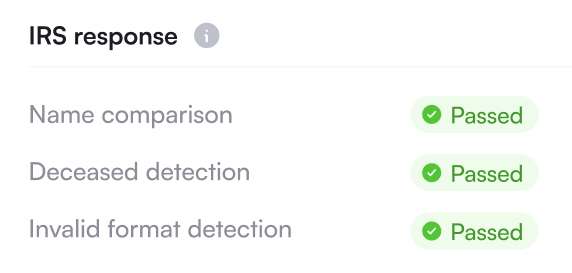
TIN verification is the process of confirming that a Taxpayer Identification Number, whether an SSN or an ITIN, is valid and belongs to the person using it. Rather than relying on public databases alone, it checks the number directly against IRS records. Specifically, it runs three checks: a name comparison, deceased detection, and invalid-format detection. That makes it a stronger identity check than a standard database lookup, and it works for both SSNs and ITINs.
Why it matters
TIN verification does two things for your screening process.
First, it makes your identity check more reliable. Because it goes straight to IRS records rather than public data, it can catch problems a standard database check might miss, such as an invalid number or one tied to someone who is deceased. That’s an early fraud signal you’d want to see before you approve anyone.
Second, it lets you screen a broader range of applicants. Because TIN verification can confirm ITINs, you can run qualified renters who don’t have an SSN through the same process as everyone else, instead of turning them away or handling them by hand.
ITIN vs. SSN: what’s the difference?
Both are nine-digit numbers, and both identify a person to the IRS. The difference is who they’re for and what they signal. An SSN is tied to work authorization and Social Security eligibility. An ITIN is purely a tax-processing number: the IRS issues it so that someone who isn’t eligible for an SSN can still meet their tax obligations, and it’s issued regardless of immigration status. An ITIN doesn’t authorize work or confer benefits. It simply gives a person a legitimate, verifiable tax identity.
For screening, the practical takeaway is this: an applicant having an ITIN instead of an SSN is not a red flag. It’s a normal situation for a large and growing pool of renters.
Screening applicants who don’t have an SSN
Traditional tenant screening leans heavily on the SSN. It’s the key most identity and credit checks are built around. So when an applicant shows up with an ITIN instead, many leasing teams hit a wall, and the common response is a manual workaround: extra documentation, side processes, or simply declining the application because it doesn’t fit the standard flow.
TIN verification removes that wall. By confirming an ITIN directly against IRS records, it lets a no-SSN applicant go through the same structured path as everyone else. That unlocks a large pool of qualified renters, people with stable jobs, strong income, and good references, who you might otherwise lose. And because they run through the same defined, criteria-based process as every other applicant, it’s both more efficient and easier to apply fairly.
How it works in BoomScreen
In BoomScreen, this runs through TIN verification, an optional add-on available whenever you use Persona for identity verification. To turn it on, go to Screening settings, open your screening template’s Identity verification step, select Persona, and toggle on TIN verification. From then on, results appear right on the applicant’s report as passed, failed, or skipped.
FAQ
Can you rent to someone with an ITIN?
Yes. An ITIN is a legitimate, IRS-issued identifier, and there’s no general rule against renting to an applicant who has one rather than an SSN. What matters is that you can verify their identity and apply your standard screening criteria consistently. As with any screening policy, confirm any state or local specifics with your own legal or compliance team.
.png)